A single employee approving a convincing fake Microsoft 365 sign-in prompt can create more disruption than a failed server ever did. The difference is that the attacker may already be using a valid account, moving quietly through email, cloud storage, financial systems, and vendor portals. That reality shapes the business cybersecurity trends 2026 leaders need to address.
For small and midsize businesses, cybersecurity is no longer a separate technical project completed once a year. It is part of keeping payroll moving, customer information protected, teams productive, and operations running when something goes wrong. The strongest approach is practical: reduce the opportunities for attackers, detect unusual activity early, and make sure the business can recover without prolonged downtime.
1. Identity Security Becomes the First Line of Defense
Passwords alone have been an inadequate control for years, but 2026 will push more businesses to treat identity protection as a daily operational requirement. Criminals do not always need to break into a network when they can trick an employee into handing over credentials or approving a fraudulent login request.
Multi-factor authentication remains essential, but its quality matters. A basic text-message code is better than no protection, yet it can still be vulnerable to phishing, SIM swapping, and social engineering. Businesses handling sensitive records, financial transactions, or administrative systems should consider phishing-resistant options such as authenticator apps with number matching, security keys, or passkeys where supported.
Identity protection also means limiting access. An employee should have access to the systems and files required for their role, not every shared folder or administrative tool in the company. This is especially important when employees change positions, work remotely, or leave the organization. Delayed offboarding is not just an HR gap. It is a security exposure.
What business leaders should do
Review who has administrator privileges, access to financial platforms, access to shared cloud storage, and authority to approve payments. Then establish a clear process for onboarding, role changes, and offboarding. The goal is not to make work harder. It is to make sure access matches responsibility at every stage of employment.
2. AI-Powered Attacks Will Demand Better Verification
Artificial intelligence is helping organizations analyze data, automate routine work, and support customer service. It is also making cybercrime more believable. Attackers can create polished phishing messages, imitate writing styles, translate scams cleanly, and generate voice clips that sound like an executive, vendor, or family member.
The practical risk is not that every message will be perfect. It is that employees will receive more credible messages at greater volume. A rushed accounts payable employee may receive an email that appears to come from a familiar vendor and requests updated banking information. An operations manager may get a voicemail that sounds like the owner asking for an urgent wire transfer.
Technology can filter many threats, but it cannot replace a verification culture. Employees should know that urgency, secrecy, and unexpected payment changes are reasons to pause. Payment instructions, password reset requests, and sensitive data requests should be confirmed through a known phone number or a separate trusted channel.
AI use inside the business needs governance as well. Staff may paste client details, financial information, contracts, or internal documents into public AI tools without understanding where that information is stored or how it could be used. A sensible policy identifies approved tools, the types of information employees may enter, and when human review is required. The right policy depends on the industry and data involved, but no business should leave those decisions entirely to individual employees.
3. Security Awareness Training Must Be Shorter and More Frequent
Annual cybersecurity training is often treated as a compliance task. Employees click through slides, answer a few questions, and return to work. That format does little to prepare someone for a realistic phishing email delivered nine months later.
In 2026, effective security awareness programs will be more continuous and role-specific. A five-minute lesson on recognizing invoice fraud may be more useful for a finance team than a broad annual presentation. Front-desk staff may need guidance on visitor access and phone-based social engineering. Executives may need help spotting impersonation and protecting high-value accounts.
Training should not make employees feel blamed for every risk. Most people want to do the right thing, particularly when reporting a suspicious email is easy and encouraged. Clear reporting channels help IT teams investigate quickly, block related messages, and protect others before a mistake becomes an incident.
A useful test is simple: if an employee sees something questionable at 4:45 p.m. on a Friday, do they know exactly what to do? If the answer is unclear, the process needs improvement.
4. Backup Is Shifting From Storage to Proven Recovery
Many organizations have backups. Fewer have confirmed they can restore critical systems quickly after ransomware, hardware failure, accidental deletion, or a cloud outage. That distinction matters.
Ransomware groups increasingly target backups because they know recovery removes much of their leverage. Businesses need backup systems that are protected from ordinary user accounts, monitored for failures, and stored in more than one location. Copies that are isolated or immutable can prevent attackers from encrypting or deleting every available version.
Recovery planning should go beyond asking whether files are backed up. Leaders should know which applications are most critical, how long they can be unavailable, and what the team will use if normal systems are down. A law firm, medical office, manufacturer, and professional services company may all have different recovery priorities.
Testing is the part that cannot be skipped. Restoring a sample file is useful, but it is not the same as restoring a server, business application, or complete workstation. Scheduled recovery testing exposes missing passwords, overlooked dependencies, outdated documentation, and unrealistic recovery expectations before an emergency forces the issue.
5. Managed Detection Is Becoming More Relevant for Smaller Businesses
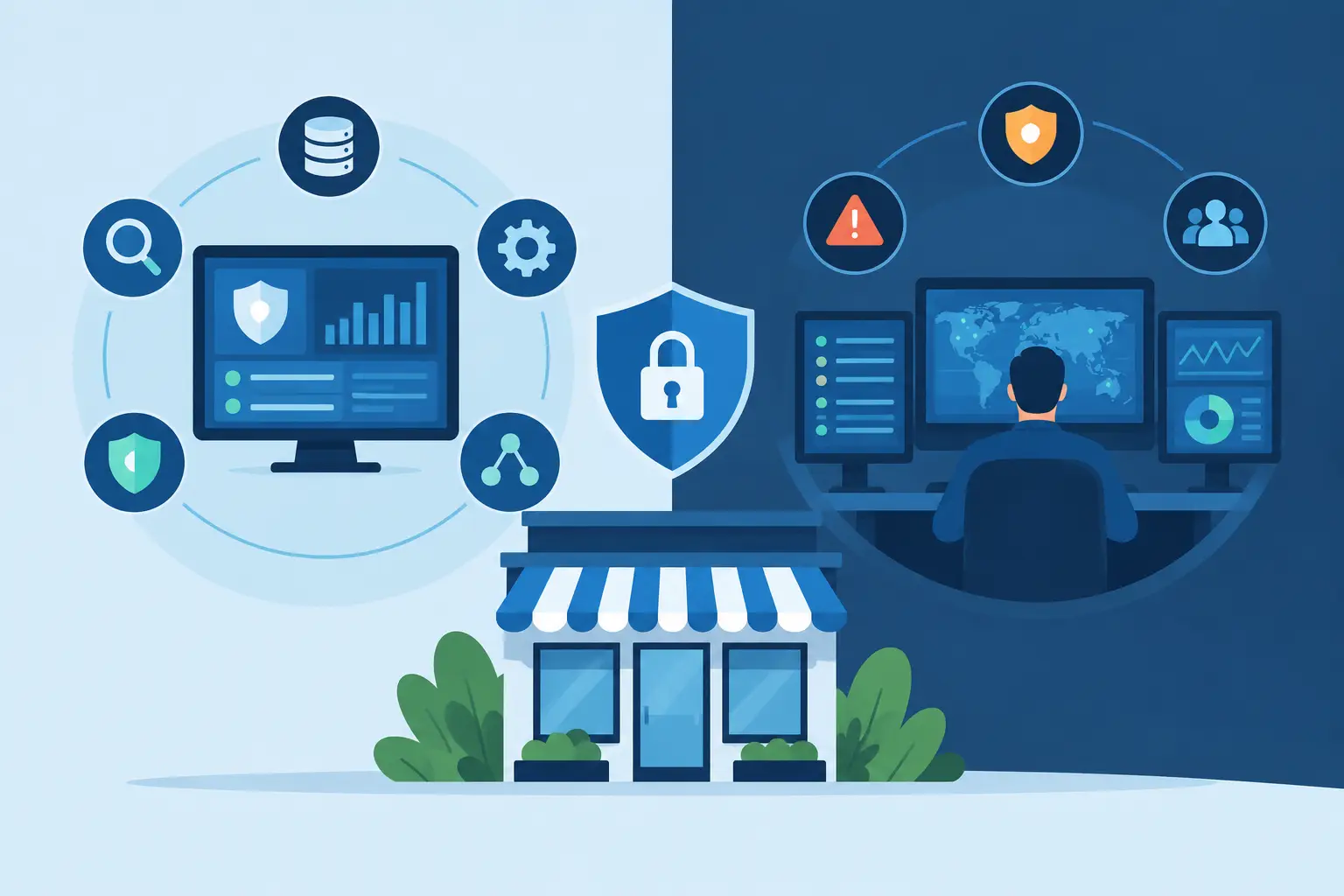
Cybersecurity tools generate alerts around the clock. A login from an unusual location, a suspicious file download, or a new administrator account may be harmless, or it may be the first sign of an active attack. The challenge for a small business is that no one may be available to review those alerts at night or separate noise from a genuine threat.
This is why managed detection and response services are becoming more relevant outside large enterprises. The service model can provide ongoing monitoring, investigation, and escalation without requiring a business to build a full internal security operations team. It is not a substitute for sound technology management, but it adds a critical layer of visibility.
The trade-off is that not every business needs the same monitoring level. A company with highly regulated data, frequent payment activity, remote employees, or multiple locations may need broader coverage than a small office with limited systems. A technology partner should help align monitoring and response capabilities with the actual business risk, not sell a one-size-fits-all package.
6. Vendor and Cloud Risk Need Clear Ownership
Businesses rely on a growing number of outside platforms for accounting, communication, customer relationship management, payment processing, file sharing, phone systems, and more. Each vendor can improve efficiency, but every connection also introduces a question: who is responsible when access, configuration, or data protection fails?
Cloud providers secure their own infrastructure, but customers are generally responsible for user accounts, permissions, data sharing settings, and much of their configuration. Assuming a cloud platform automatically protects every file and account can lead to expensive gaps.
Vendor risk management does not need to become a massive corporate program. Start with a current list of critical vendors, identify who owns each relationship internally, and document where sensitive data is stored. Review whether multi-factor authentication is enabled, whether former employees have been removed, and whether the vendor has a clear support path during an incident.
For Central Florida businesses, vendor coordination can be particularly valuable after a disruption. Internet providers, phone carriers, cloud vendors, insurance contacts, and software support teams may all need to be engaged at once. Having documented contacts and a responsible technology partner reduces confusion when time matters most.
7. Cyber Insurance Will Require Evidence, Not Assurances
Cyber insurance applications are asking more detailed questions about security controls, and insurers increasingly expect businesses to prove those controls are in place. Multi-factor authentication, endpoint protection, backup practices, incident response planning, and employee training are no longer nice-to-have answers on a questionnaire.
Coverage requirements vary, and insurance should never be mistaken for a cybersecurity strategy. A policy may help with certain financial consequences, but it will not automatically restore customer trust, recover lost productivity, or prevent an operational interruption. It also may not cover every cost associated with an incident.
Businesses should review their controls before renewal rather than rushing through a form at the last minute. Accurate answers matter. So does maintaining documentation that shows security measures are actively managed.
Turning 2026 Trends Into a Practical Plan
The most useful cybersecurity plan is not the longest one. It is the plan that assigns ownership, addresses the most likely risks, and gets tested. Start with identity protection and access reviews. Confirm backups can restore critical systems. Train employees on current scams. Document who to call and what to do when suspicious activity appears.
From there, build the right level of ongoing monitoring, vendor oversight, and incident response around your business. TechFusion helps organizations turn those priorities into managed, understandable technology practices so security supports daily operations instead of becoming another source of uncertainty.
The question for 2026 is not whether cyber threats will become more sophisticated. They will. The more useful question is whether your business can recognize trouble early, contain it quickly, and keep serving customers while recovery is underway.