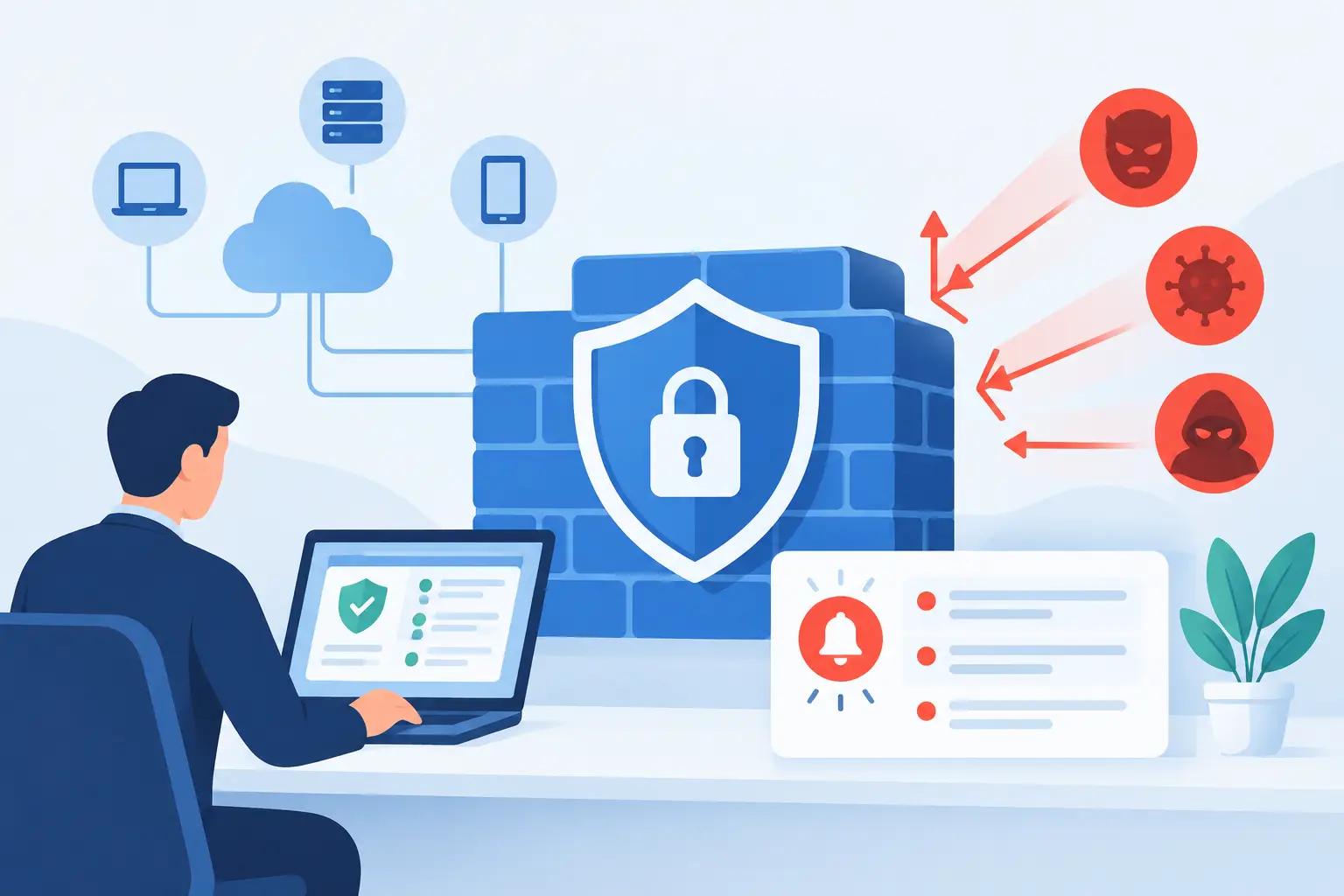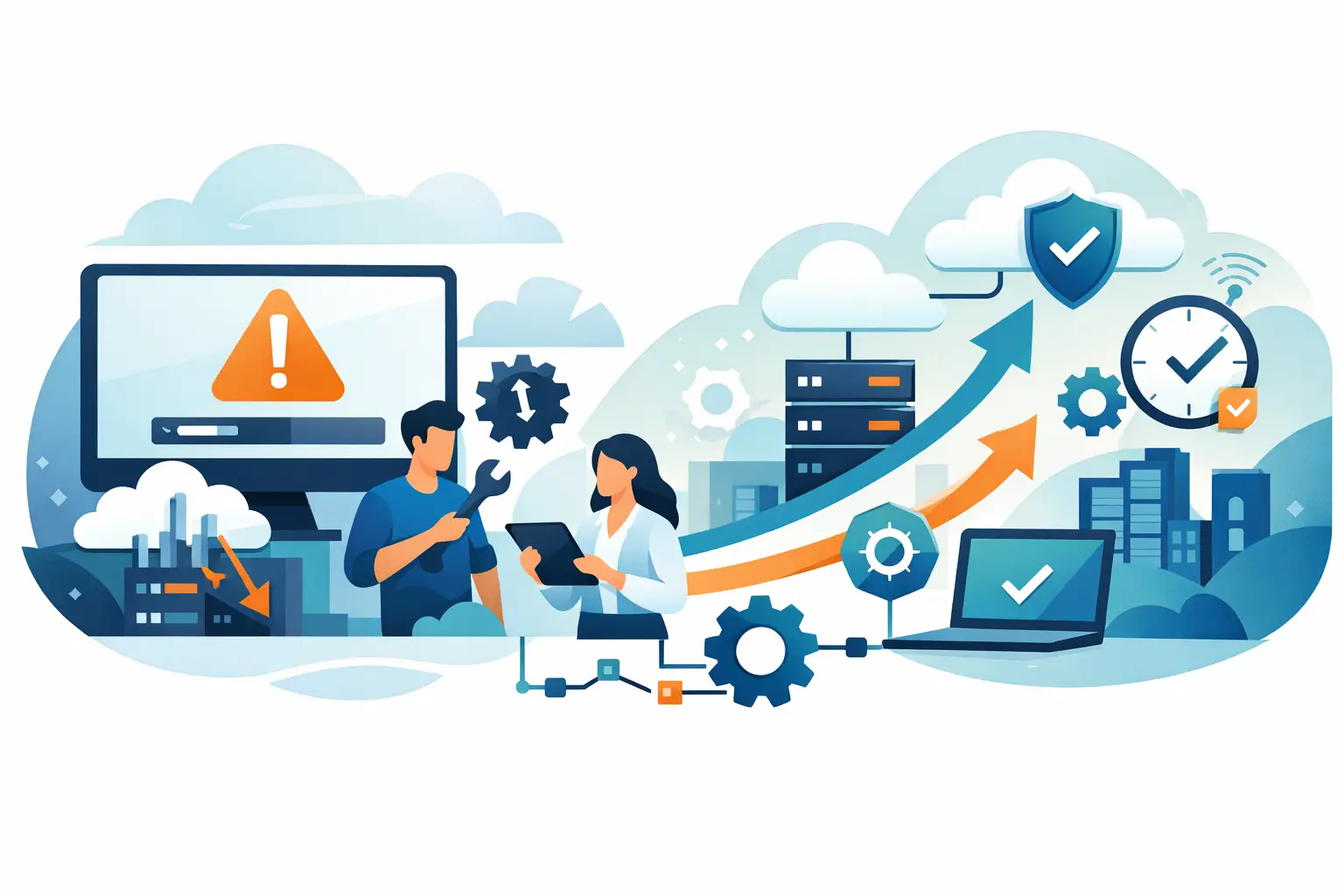
A suspicious email reaches an employee at 8:12 a.m. By 8:18, the attachment has launched a previously unseen strain of malware that standard signatures do not recognize. This is where the MDR versus antivirus conversation becomes practical: one tool may block known threats, while the other is designed to investigate suspicious activity and contain an active incident.
For small and midsize businesses, cybersecurity decisions cannot be based on product labels alone. Owners and operations leaders need to know who is watching, what happens after an alert appears, and whether a security event can be stopped before it interrupts payroll, customer service, or daily operations.
MDR versus antivirus: the core difference
Antivirus software is an endpoint security tool installed on computers and other devices. Its traditional role is to identify and block malicious files, programs, and known attack patterns. Modern antivirus platforms often add useful capabilities such as web filtering, ransomware protection, behavioral analysis, and automatic updates.
Managed Detection and Response, or MDR, is a managed security service. It combines security technology with trained analysts who monitor activity, investigate alerts, identify credible threats, and take or recommend response actions. MDR commonly uses endpoint detection and response technology, often called EDR, as one source of visibility. Depending on the service, it can also review identity, email, network, cloud, and log data.
The distinction matters because antivirus answers, “Can this device block or remove a known threat?” MDR addresses a broader operational question: “Is someone trying to compromise our business, and who will respond if they succeed in getting past a control?”
What antivirus does well
Antivirus remains a necessary layer of protection for nearly every business device. It can stop many common threats quickly and automatically, often before an employee knows anything happened. For organizations with a limited budget, it is a fundamental starting point rather than an optional extra.
A properly managed antivirus solution helps reduce exposure to known malware, malicious downloads, risky websites, and infected attachments. It also supports consistent security standards across employee laptops, desktops, and servers. When paired with patching, multi-factor authentication, email protection, and reliable backups, antivirus is part of a sound security baseline.
Its limitation is not that antivirus is ineffective. The limitation is that attackers change tactics. They may use legitimate administrative tools, stolen passwords, fake login pages, or customized malware that does not match a known signature. An antivirus alert may also require human judgment. A business still needs someone to determine whether a blocked file was an isolated event or evidence of a larger compromise.
What MDR adds to the security equation
MDR is built for the period after suspicious activity begins. Instead of relying only on automated prevention, an MDR team looks for signs that deserve investigation: an employee account logging in from an unusual location, a device running unfamiliar PowerShell commands, a user downloading large volumes of data, or ransomware behavior beginning on a file server.
The service can provide continuous monitoring that most small internal IT teams cannot staff on their own. Security analysts review and correlate events, separating routine noise from activity that could affect the business. This reduces alert fatigue, a common issue when teams receive more warnings than they can realistically investigate.
When a real threat is identified, response is the critical value. An MDR provider may isolate an infected endpoint, terminate a malicious process, disable a compromised account, or provide clear instructions to the business and its IT partner. The exact actions depend on the provider’s scope, tools, and authorization model, so decision-makers should ask specifically what happens during an incident and who has authority to act.
MDR does not make security automatic or remove every risk. It is a service that improves detection and response when prevention controls are bypassed. Its effectiveness depends on proper deployment, accurate asset information, defined escalation contacts, and coordination with the people responsible for IT operations.
Why businesses often need both
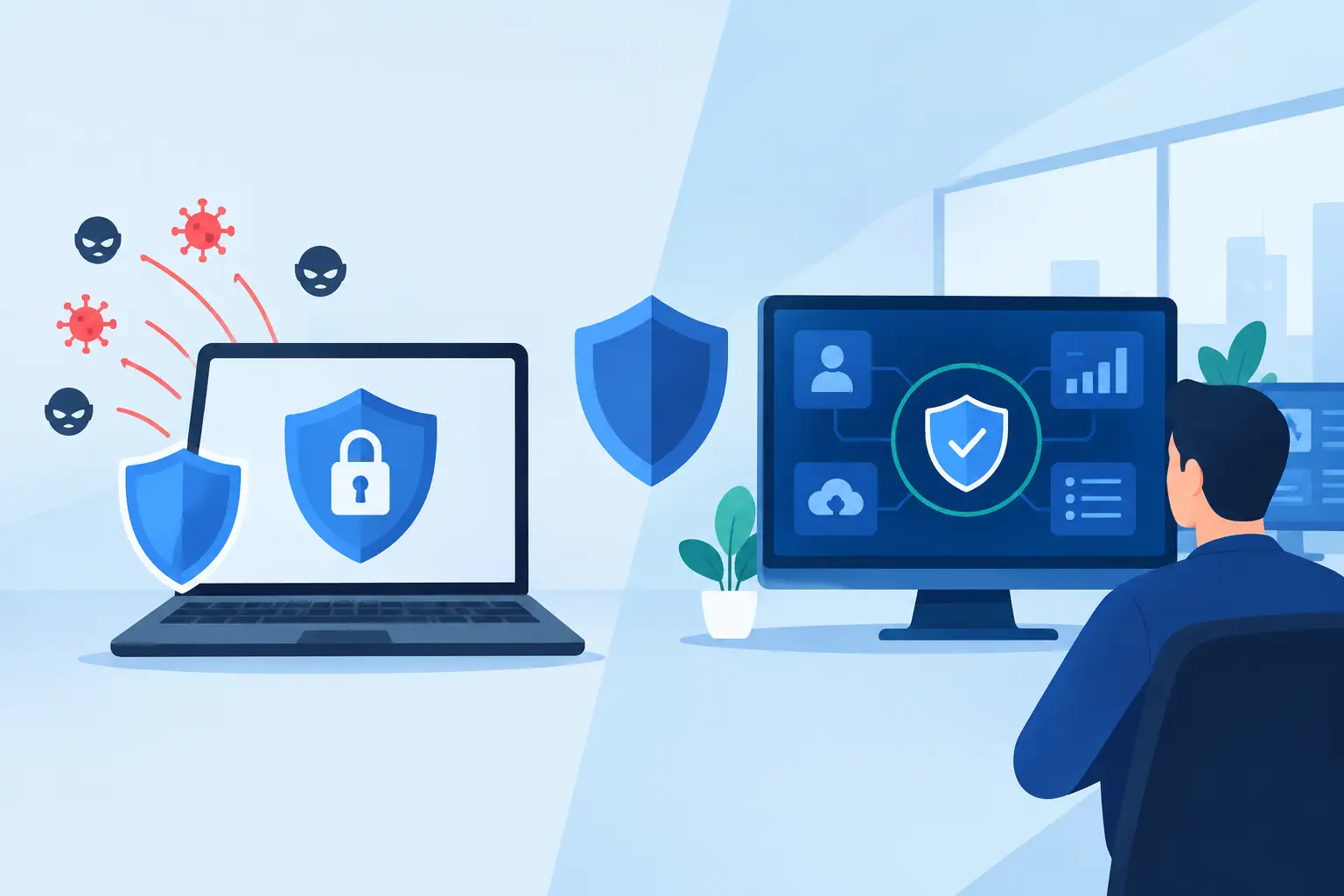
MDR and antivirus are frequently framed as competing choices, but they serve different purposes. Antivirus works primarily as a preventative control on the device. MDR adds monitoring, investigation, and response around the activity occurring across the environment.
Think of antivirus as a locked door with an alarm. It can stop many unauthorized attempts. MDR is the security team that notices repeated attempts at several doors, checks the cameras, determines whether someone got inside through another entrance, and acts before the issue spreads.
For many organizations, the practical approach is to use a modern endpoint protection platform as the foundation and add MDR to ensure alerts are actively monitored. This is especially valuable when the business lacks a dedicated security operations center, has an internal IT team focused on user support, or cannot reliably respond to a serious alert after normal business hours.
When antivirus alone may be enough
Antivirus-only protection can be reasonable in limited circumstances. A very small organization with minimal devices, little sensitive data, no regulatory requirements, and a tightly controlled technology environment may choose to begin there. The business should still use multi-factor authentication, patch systems promptly, maintain tested backups, and make sure someone reviews security alerts.
Cost can also influence the decision. MDR is an ongoing service, and the right level of coverage should match the organization’s risk, budget, and operational needs. Paying for a broad service without understanding its response process is not a good outcome.
However, antivirus alone becomes less comfortable when a business processes payment information, stores customer records, relies heavily on cloud applications, supports remote employees, or faces meaningful downtime costs. It is also a weaker fit when no one internally has the time or expertise to review endpoint alerts and decide whether an incident requires immediate containment.
When MDR is the stronger fit
MDR is particularly useful for businesses that cannot afford to wait until the next business day to address a potential compromise. A medical practice, law firm, manufacturer, professional services company, or growing organization with distributed employees may have systems and data that create a larger target and a more disruptive recovery process.
It is also valuable after a business has experienced phishing attempts, account compromises, ransomware concerns, or unexplained device activity. These events do not always mean an organization needs the most expensive security stack. They do show why prevention without active follow-through can leave a gap.
Before selecting an MDR service, ask how it monitors your environment, what data sources it uses, whether coverage is available around the clock, and how quickly analysts escalate verified threats. Confirm whether the provider can isolate devices or disable accounts directly, and whether those actions require approval. Request clear reporting that explains risks and actions in business terms, not just a stream of technical alerts.
Security also depends on everyday IT discipline
Neither MDR nor antivirus can compensate for unmanaged technology. Former employees should lose access promptly. Devices need regular patching and inventory management. Backups must be protected and tested, not merely scheduled. Employees need practical guidance on spotting fraudulent emails and reporting suspicious activity without fear of blame.
This is where a managed IT partner can make cybersecurity more manageable. At TechFusion, security monitoring can be coordinated with endpoint management, user support, backup planning, network oversight, and incident communication. That connection matters during an urgent event because the team responding to a threat also understands which systems, users, vendors, and business processes may be affected.
The best security decision is not the one with the longest feature list. It is the one that gives your business a clear, tested answer to a simple question: when something suspicious happens, who will see it, who will act, and how quickly can your team get back to work?