A suspicious sign-in at 2:00 a.m., an employee who clicks a convincing invoice, or a new device connecting to the network can become a costly problem if no one sees it quickly. The SIEM versus SOC question matters because these are often discussed as competing security options, when they serve very different roles. One is a technology platform that collects and analyzes security data. The other is the people, processes, and tools responsible for responding to threats.
For a small or midsize business, understanding that distinction helps prevent an expensive mistake: buying a security tool without a clear plan for who will monitor it, investigate alerts, and take action when an incident occurs.
What Is a SIEM?
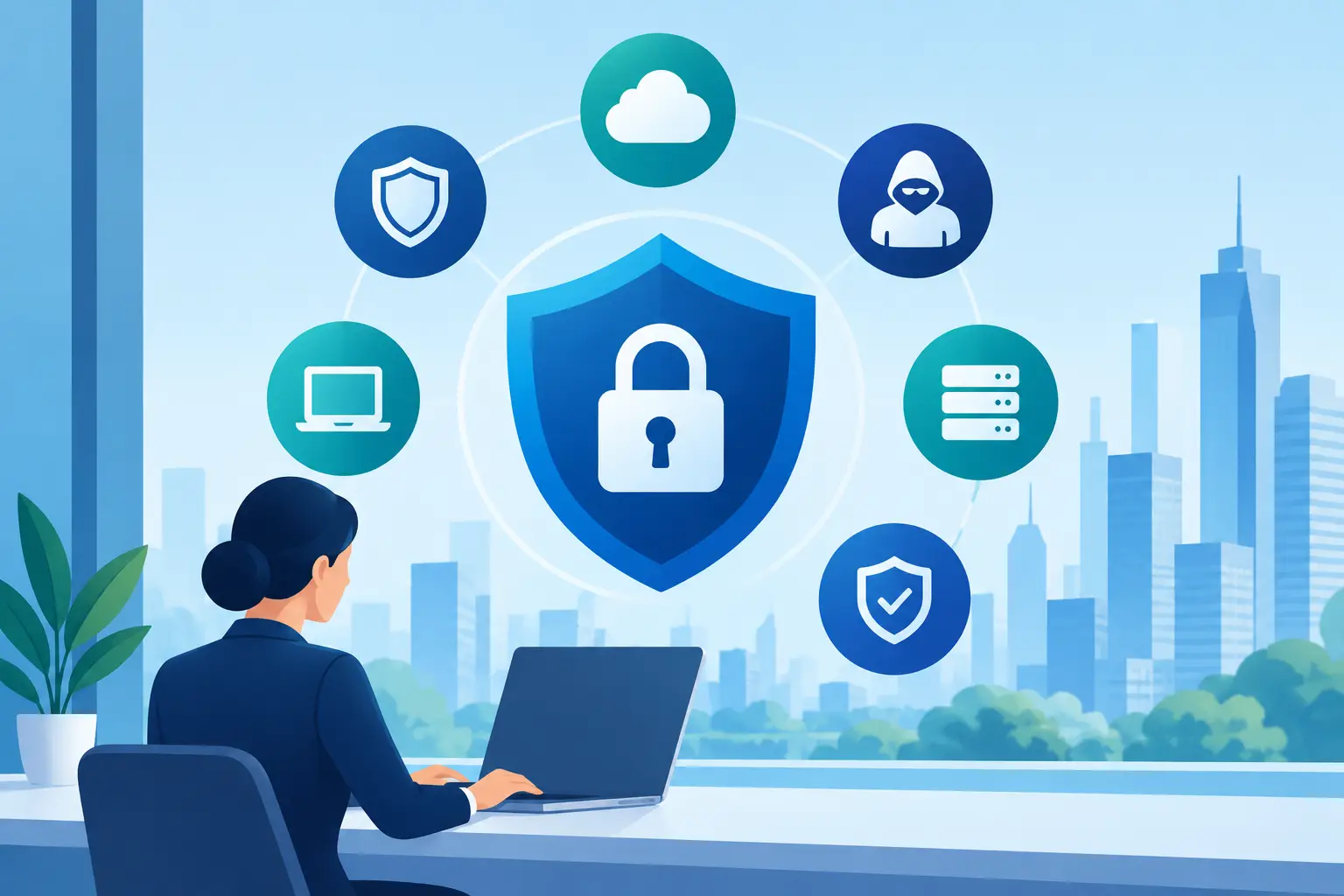
SIEM stands for Security Information and Event Management. A SIEM platform gathers security logs and events from across an organization’s environment, then brings them into one place for analysis. Those sources may include firewalls, servers, cloud applications, endpoint protection software, email systems, network devices, and identity platforms such as Microsoft 365.
Think of a SIEM as a security recordkeeper with analytical capabilities. It can spot patterns that would be difficult to find by reviewing individual logs. For example, it may correlate a failed sign-in from an unusual location with a successful sign-in moments later, followed by an attempt to access sensitive files. That sequence could indicate a compromised user account.
A properly configured SIEM can help a business retain log data for investigations, support compliance requirements, identify unusual activity, and create alerts based on defined rules or behavioral analysis. It gives security teams visibility into events occurring across systems that may otherwise operate separately.
But a SIEM does not automatically equal protection. It produces data, findings, and alerts. Someone still needs to determine whether an alert is legitimate, assess its urgency, contain a threat, and document what happened.
Where SIEM tools provide value
SIEM technology is especially useful when a business has several important systems to monitor, remote employees, cloud services, regulated data, or a need for longer-term log retention. It can also improve incident investigations by providing a more complete timeline of activity.
The trade-off is complexity. A SIEM needs thoughtful setup, log-source integration, alert tuning, and ongoing maintenance. If every routine event generates an alert, the system can overwhelm the people responsible for reviewing it. If the rules are too loose, meaningful warning signs may be missed.
What Is a SOC?
A SOC, or Security Operations Center, is the function that monitors, investigates, and responds to cybersecurity activity. It may be an internal team, an outsourced service, or a combination of both. Its job is not simply to watch dashboards. A capable SOC uses defined procedures to decide whether an alert is harmless, suspicious, or an active incident requiring immediate action.
A SOC typically brings together security analysts, monitoring processes, threat intelligence, escalation paths, and response procedures. Depending on the service arrangement, the team may investigate alerts around the clock, isolate a compromised device, help secure an account, coordinate with IT support, and guide the business through recovery.
For business leaders, the most important point is accountability. A SOC answers the practical question: when an alert appears, who is responsible for acting on it? That response may involve resetting credentials, blocking an IP address, removing malicious email messages, reviewing endpoint activity, or contacting the business when a decision is required.
Not every SOC provides the same response level
The term SOC can describe very different service models. Some providers notify clients of suspicious activity but leave all remediation to the client’s IT team. Others perform investigation and containment under agreed-upon procedures. A business should understand exactly what happens after a high-severity alert, who has authority to act, and whether monitoring is available outside standard business hours.
Response time matters as much as detection. An alert that sits unreviewed overnight can give an attacker time to access more accounts, move through the network, or encrypt files. For organizations without internal cybersecurity staff, a managed SOC can provide coverage that would be difficult and costly to build internally.
SIEM Versus SOC: The Core Difference
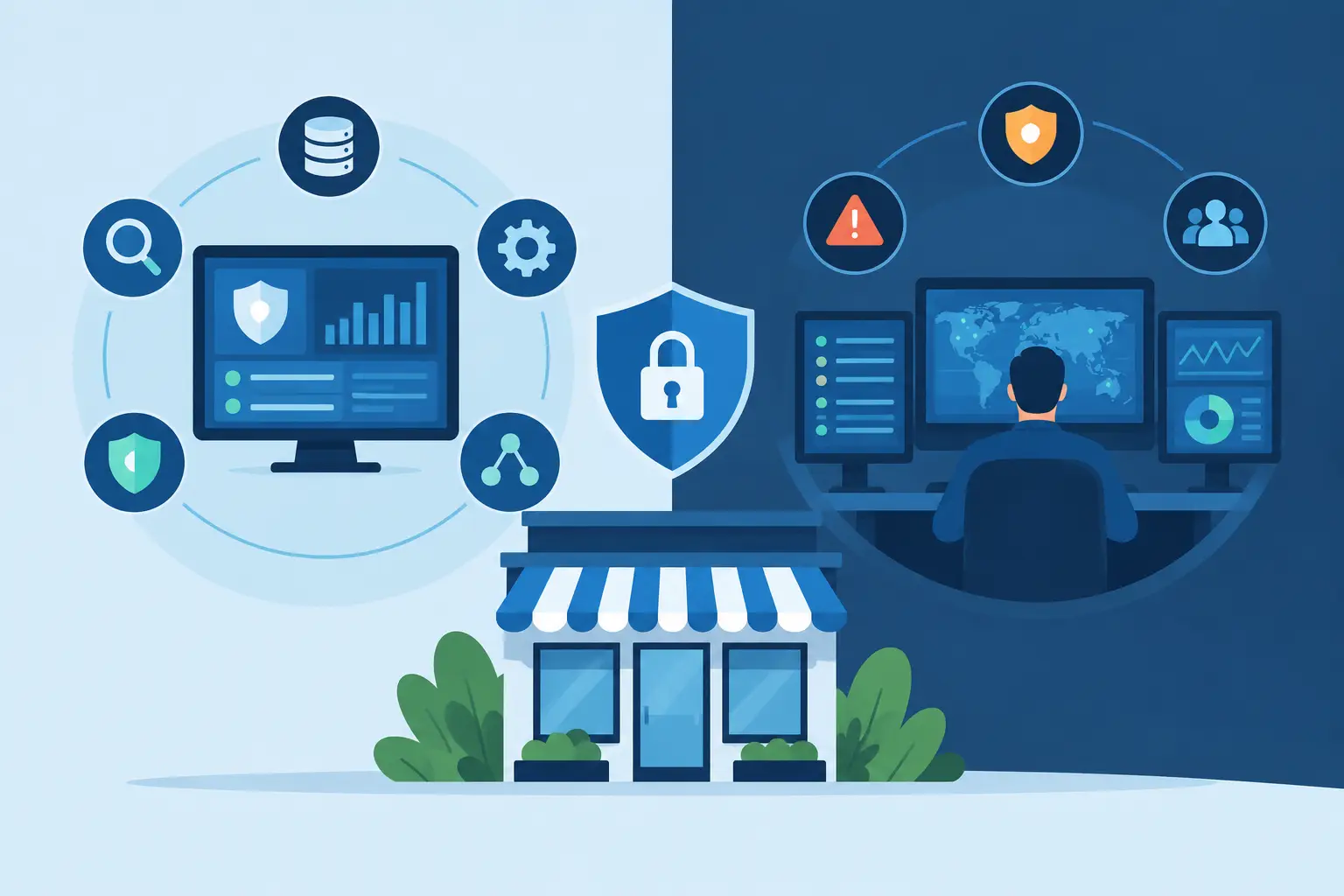
The simplest way to understand SIEM versus SOC is this: a SIEM is a platform, while a SOC is an operating capability. The SIEM can be one of the tools a SOC uses, but the terms are not interchangeable.
A SIEM collects and correlates security information. A SOC turns that information into decisions and action. The SIEM may flag repeated failed login attempts; the SOC determines whether they represent a user who forgot a password, an automated attack, or a compromised account trying to spread access.
This distinction affects budgeting and risk planning. Purchasing a SIEM license may appear to solve a security monitoring need, but it does not provide trained analysts, escalation procedures, or incident response coverage. On the other hand, a SOC without adequate visibility into endpoints, identity systems, email, and network activity may have limited ability to detect sophisticated threats.
The strongest approach often combines both. The SOC uses SIEM data alongside endpoint detection tools, email security, vulnerability information, and other sources to investigate what is happening. The right mix depends on the organization’s size, technology environment, risk exposure, and internal capabilities.
How to Decide What Your Business Needs
A small business with a straightforward environment may not need to operate its own SIEM. If the organization uses a standard cloud productivity platform, managed endpoints, a properly configured firewall, and a limited number of users, a managed security service may offer more practical value than deploying and managing a complex platform internally.
A company with sensitive customer data, compliance obligations, multiple locations, a larger remote workforce, or frequent vendor access may need more detailed centralized logging and monitoring. In those cases, SIEM capabilities can support better oversight and investigation, particularly when paired with a team that reviews alerts consistently.
Start with the business impact of a security incident. Consider which systems would disrupt operations if they were unavailable, what information could expose the company or its customers, and how long the organization could function without email, file access, phones, or line-of-business software. Those answers should guide the security model, rather than the appeal of a particular acronym.
It is also worth reviewing internal capacity honestly. Do you have personnel who can interpret alerts and respond after hours? Are they trained in incident handling? Can they distinguish routine activity from a genuine threat without slowing down daily operations? If the answer is no, technology alone may create a false sense of security.
Questions to Ask a Managed Security Provider
Before choosing a managed SOC or SIEM-based security service, ask how the provider monitors your environment and what actions it can take on your behalf. Clarify whether monitoring is 24/7, how quickly critical alerts are reviewed, and whether the service includes containment or only notification.
You should also ask which systems are included in monitoring. Email, user identities, endpoints, firewalls, cloud platforms, and backups all provide different pieces of the security picture. A provider should explain coverage in plain language and identify any gaps that remain.
Finally, ask how incident communication works. During a suspected attack, business leaders need a clear point of contact, direct updates, and practical next steps. Good security support should reduce confusion, not add to it.
Security monitoring is most effective when it is connected to everyday IT management. A team that understands your users, systems, vendors, backups, and operational priorities can respond with greater context when something looks wrong. TechFusion helps businesses build that kind of ongoing support relationship, so security decisions serve continuity and productivity rather than becoming another disconnected technology project.
The best choice is not the tool with the most alerts or the service with the most technical language. It is the security coverage that gives your business meaningful visibility, a dependable response plan, and confidence that someone is ready to act when it counts.