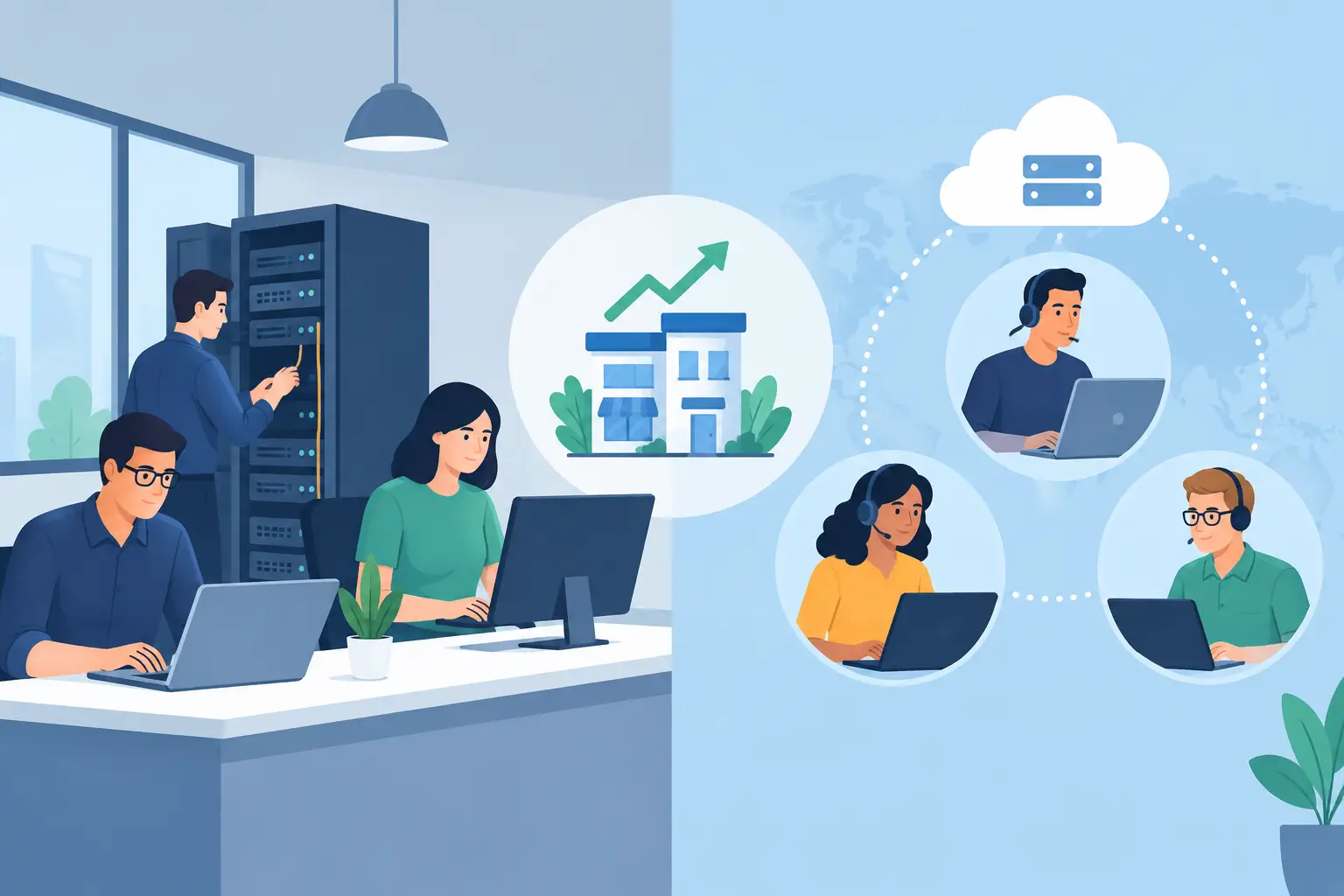
A network outage at 9:00 a.m., a new employee waiting for a laptop, or a suspicious email in an executive’s inbox can quickly become a business problem, not just an IT problem. The choice between internal versus outsourced IT determines who responds, how quickly they can act, and whether your technology is being actively managed before disruptions affect your team.
For small and midsize businesses, the best answer is rarely based on a simple preference for an in-house person or an outside provider. It depends on your operational complexity, growth plans, risk exposure, budget, and the level of support employees need every day.
Internal Versus Outsourced IT: The Core Difference
Internal IT means hiring employees who work directly for your organization and manage technology as part of your staff. That may be one IT manager, a small department, or a larger technical team with specialized roles.
Outsourced IT means relying on an external technology provider to deliver some or all IT functions. A managed IT services provider may monitor systems, support users, manage cybersecurity tools, maintain backups, coordinate vendors, and guide technology decisions under an ongoing service agreement.
The real distinction is not whether one model is more committed than the other. It is how much expertise, availability, and operational coverage your business receives for its investment. A capable internal IT professional can be invaluable. But one person cannot realistically be available for every device issue, security alert, vendor call, network project, and emergency at all times.
When Internal IT Makes Sense
An internal IT team can be a strong fit for businesses with complex environments, highly specialized applications, or enough scale to justify several full-time technical roles. It also gives leadership direct day-to-day access to people who understand company processes, personalities, and priorities.
For example, a company that develops proprietary software, operates a large facility, or uses industry-specific systems may benefit from having technical staff embedded in the business. Internal personnel can build deep knowledge of workflows and work closely with department leaders on long-term projects.
However, the cost of internal IT extends beyond salary. Businesses must account for benefits, recruiting, training, certifications, software tools, coverage during vacations, and the risk of knowledge leaving when an employee resigns. A single IT hire may be skilled in user support and networks but have limited experience in cybersecurity, cloud architecture, disaster recovery, or strategic planning.
Internal IT can also become reactive when one person is constantly answering tickets. If the day is consumed by password resets, printer problems, and device setup, proactive work such as patching, documentation, backup testing, and security improvements can slip behind.
What Outsourced IT Brings to the Table
Outsourced IT gives a business access to a broader team without requiring multiple full-time hires. Instead of depending on one person’s skill set, you can draw on specialists in help desk support, networks, cloud services, cybersecurity, backup and recovery, and vendor management.
This model is especially useful for organizations that need dependable support but do not need, or cannot justify, a full internal department. Employees have a clear path for reporting issues, while leadership gains visibility into technology risks, aging equipment, security priorities, and future investments.
A qualified provider should do more than fix tickets after something breaks. Ongoing monitoring, patch management, backup oversight, account management, and security reviews help reduce avoidable disruptions. The provider should also coordinate with phone, internet, software, and hardware vendors so your staff is not left trying to translate technical problems between multiple companies.
Cost predictability is another advantage. A monthly service model can make it easier to budget for support, security tools, and routine maintenance. That does not mean every project is included, and business leaders should understand exactly what is covered. Still, planned spending is often easier to manage than unexpected emergency repairs or the cost of a serious outage.
Outsourcing is not automatically the right choice if a provider offers generic service with limited accountability. Businesses should expect clear communication, documented recommendations, responsive support, and a team that learns how the organization operates. The relationship should feel like an extension of your business, not an anonymous call center.
Comparing Cost, Coverage, and Control
Cost is usually the first question, but it should not be the only one. A lower monthly fee is not a value if it leaves your business without adequate security oversight, backup protection, or timely support. Likewise, an internal hire may appear more expensive on paper but be justified when the role supports a highly specialized operation.
Coverage is often where the difference becomes clear. An internal IT employee may know your environment exceptionally well, but they cannot work around the clock, cover every discipline, or provide their own backup during absences. An outsourced team can distribute responsibilities across technicians and specialists, helping prevent a single point of failure.
Control requires a more careful look. Some leaders assume internal IT always provides greater control. In reality, control comes from clear documentation, defined processes, accurate asset records, strong permissions management, and regular communication. A well-managed outsourced relationship can provide strong accountability through reporting, service expectations, and recurring planning meetings.
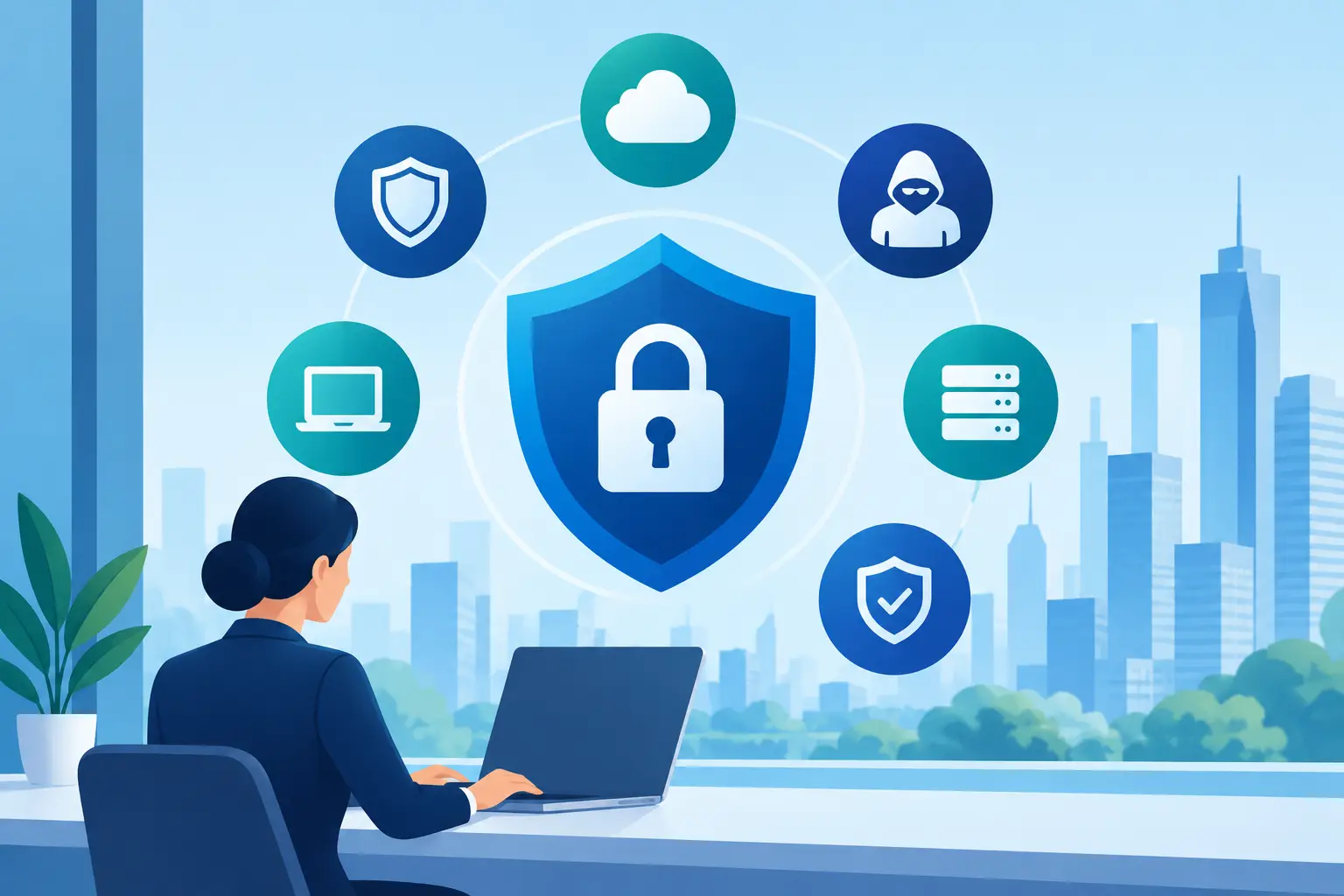
Security deserves special attention. Cybersecurity is not a single product that can be installed and forgotten. It requires layered tools, employee awareness, access controls, patching, monitoring, tested backups, and an incident response plan. An outsourced provider with dedicated security capabilities can help cover areas that are difficult for a lone internal generalist to manage consistently.
The Hybrid Model Often Delivers the Best Fit
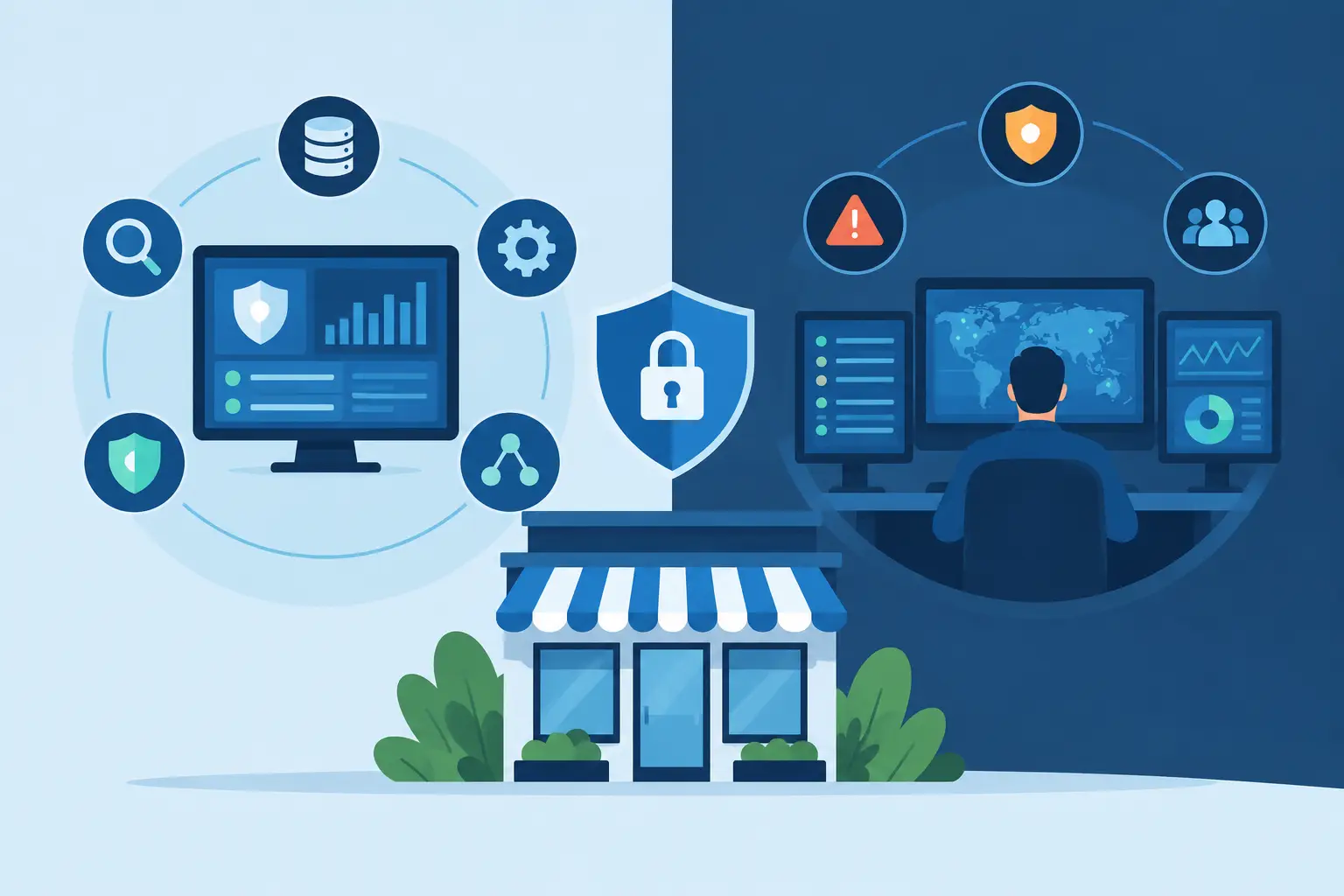
Many growing businesses do not need to choose one model exclusively. A hybrid approach pairs internal business knowledge with outsourced technical depth.
In this arrangement, an internal operations manager, office administrator, or IT coordinator may handle day-to-day communication, approvals, and employee needs. The outsourced provider manages monitoring, security, help desk escalation, infrastructure maintenance, onboarding and offboarding tasks, and larger projects. This allows internal leaders to focus on business operations while retaining a knowledgeable point person inside the company.
A hybrid model also works well for organizations that already have an IT employee who is stretched thin. Rather than replacing that person, outside support can take over routine tickets, after-hours coverage, vendor coordination, or cybersecurity responsibilities. The internal employee can then spend more time on strategic initiatives that directly support the business.
Questions to Ask Before You Choose
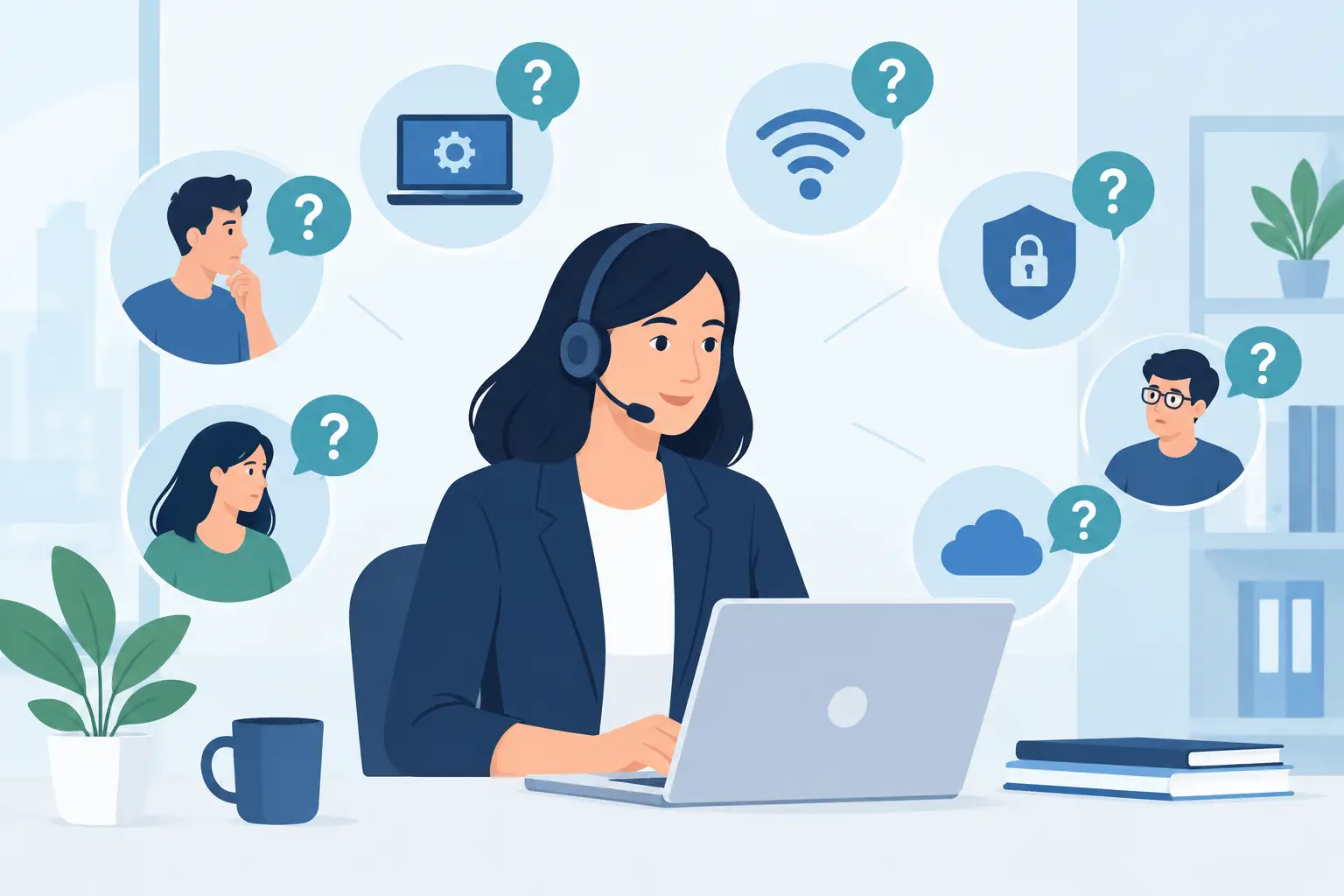
Start with the disruptions your business experiences most often. If employees regularly lose time to device issues, unreliable Wi-Fi, application access problems, or delayed onboarding, you need a model that improves response and prevents recurring trouble.
Then consider your risk profile. How would your business operate if email, files, phones, or critical applications were unavailable for a day? Can you recover from ransomware or accidental data deletion? Who verifies that backups are working and that former employees no longer have access to systems?
It is also wise to assess your growth plans. Opening another location, adding remote employees, adopting cloud applications, or introducing AI tools can create new support and security demands. The right IT model should give you room to grow without forcing a rushed hiring decision or a major technology overhaul.
Finally, evaluate communication. Your provider or internal team should explain priorities in business terms. Leaders need to know what requires immediate action, what can be planned, what risk is being reduced, and what the expected impact will be on employees and customers.
Making the Transition Without Disrupting Operations
Whether you are hiring internally, moving to outsourced support, or building a hybrid arrangement, transition planning matters. Begin by documenting users, devices, applications, vendors, licenses, network equipment, administrator accounts, and backup processes. Missing information can delay support when an urgent issue occurs.
Set clear ownership for recurring work. Someone should be responsible for employee onboarding, offboarding, security alerts, equipment replacement, vendor escalation, and technology planning. When responsibilities are unclear, important tasks are easily overlooked.
A provider such as TechFusion can help businesses establish that structure while continuing to support users and protect critical systems. The goal is not to add another layer of complexity. It is to give your team a dependable path for resolving issues and improving technology over time.
The right decision is the one that keeps employees productive, protects the business, and gives leadership confidence that technology is being managed with care. Choose the support model that matches where your business is now, then make sure it can support where you plan to go next.