
Key takeaways
The “Top 10 Managed IT Service Providers in 2026: Trends and Reviews” highlights how MSPs have evolved to integrate AI-driven automation, advanced cybersecurity, and compliance services to deliver measurable business impact. Choosing the right MSP involves evaluating their technological capabilities, client reputation, and ability to support scalable, secure, and compliant IT environments tailored to your business needs.
Key points:
- AI-driven hyper-automation reduces downtime and accelerates issue resolution.
- Cybersecurity and compliance are central services, with MSPs offering managed detection, response, and Compliance as a Service.
- Multi-cloud and hybrid IT management ensure flexibility and cost optimization.
- 24/7 proactive support with guaranteed response times improves user satisfaction and operational reliability.
- Transparent pricing models and scalable solutions make MSPs accessible for SMBs and enterprises alike.
| Name | Description | Pros | Cons | Price Range |
|---|---|---|---|---|
| TechFusion, Inc. | AI-driven automation, advanced cybersecurity, cloud management, and 24/7 support with measurable outcomes. | Client-first approach, flexible pricing, strong compliance support. | Premium may be overqualified for very small businesses. | Premium pricing |
| Applied Tech | 20+ years supporting SMBs with managed and co-managed IT, cybersecurity, and strategic consulting. | Deep SMB experience, consistent customer satisfaction. | Limited specialized compliance offerings. | Mid-range |
| Corsica Technologies | Cybersecurity focus, AI-powered support, digital transformation for regulated industries. | Strong in regulated sectors, AI-driven security. | Suited for medium to large organizations. | Mid to high |
| NetGain Technologies | Customized IT support, network optimization, cloud migration with broad technology partnerships. | Flexible solutions, strong vendor partnerships. | Less tailored for micro-businesses. | Mid-range |
| Digacore | Integrated IT support, cybersecurity, compliance focused on healthcare and finance. | Strong compliance fit, operational stability. | Less strategic consulting for digital transformation. | Mid-range |
| Integrated Computer Services (ICS) | AI-enhanced monitoring, 30-minute emergency response, compliance-driven defense. | Rapid response, proactive support. | Localized focus limits wider reach. | Mid-range |
| Scalo | Network monitoring, AI consulting, software development, and managed security services. | Proven reliability, strong client testimonials. | Timezone differences for US clients. | Mid-range |
| PrimeSecured | AI-powered hyper-automation, autonomous IT services, compliance governance, multi-cloud orchestration. | Advanced AI capabilities, proactive compliance. | May be over-engineered for basic IT needs. | High-end |
| Zazz MSP | 24/7 monitoring, virtual CIO, strategic IT planning, cloud and hybrid management for tech firms. | Scalable for growth, strong compliance support. | Focused on tech sector, less fit for traditional industries. | Mid to high |
| Cortavo | Proactive security, cloud and network management, fixed-price scalable services. | Predictable pricing, business-aligned IT. | Limited breadth for specialized needs. | Mid-range |
Introduction
The landscape for managed IT services has shifted dramatically. In 2026, businesses of every size rely on partners who can deliver not just technical reliability but measurable business impact. The list of the Top 10 Managed IT Service Providers in 2026: Trends and Reviews helps you find a provider who keeps your organization secure, agile, and ready for growth. This guide compares each MSP by their experience, ability to adapt to trends like AI-driven automation and cybersecurity, and their real-world results for clients. Whether you’re a startup or a global enterprise, the right MSP is a foundation for success.
What Are Managed IT Service Providers?
> Managed IT Service Providers (MSPs) are companies that deliver outsourced IT support, cybersecurity, cloud management, and infrastructure services to businesses. In 2026, MSPs play a critical role in enabling organizations to focus on growth by handling operational IT, security, and compliance. They offer scalable solutions, proactive monitoring, and expert guidance tailored to diverse business needs.
Managed IT Service Providers, known as MSPs, deliver a broad set of outsourced IT services. These include network support, cybersecurity, cloud management, and infrastructure maintenance. In 2026, MSPs give businesses an edge by providing expertise and resources that would be expensive or hard to manage in-house.
Key services include:
- 24/7 IT support and helpdesk
- Network optimization and monitoring
- Cybersecurity protection
- Backup and disaster recovery
- Cloud management and migration
- Compliance and regulatory support
Why do businesses choose MSPs? Companies of every size need to keep data secure and systems running, especially as regulations and threats grow. MSPs adapt support as businesses scale, enabling organizations to focus on their core goals instead of IT headaches. For many, partnering with an MSP is more efficient and cost-effective than staffing a full internal IT team.
Types of Managed IT Services
MSPs offer a wide range of services that can be customized according to the client’s size, industry, and technology maturity. Some providers focus exclusively on core IT support, while others offer a full suite of services including digital transformation, business process automation, and strategic IT consulting. Common offerings include:
- Managed Security Services: Proactive monitoring, vulnerability management, endpoint protection, and incident response.
- Cloud Services: Migration, management, optimization, and security for public, private, and hybrid cloud environments.
- Infrastructure Management: Maintenance and optimization of servers, networks, and data centers, ensuring high availability and performance.
- Compliance Services: Guidance and support for meeting standards such as SOC 2, HIPAA, PCI-DSS, and GDPR, including audit preparation and ongoing monitoring.
- Strategic IT Planning: Virtual CIO (vCIO) services, technology roadmaps, and alignment of IT with business goals.
Why MSPs Are Essential in 2026
As digital transformation accelerates, organizations are facing increasingly complex IT environments. The rise of remote and hybrid work has expanded the attack surface, making security and compliance more challenging. MSPs provide specialized expertise and advanced tools that are often beyond the reach of internal teams, especially for small and mid-sized businesses. By outsourcing IT management, companies can focus on innovation, customer experience, and growth, while leaving the technical complexities to trusted experts.
2026 Trends Shaping Managed IT Services
> In 2026, managed IT services are shaped by rapid AI-driven automation, hyper-automation of support tasks, and advanced cybersecurity. MSPs are investing in AI to reduce ticket volume, accelerate resolution, and provide proactive threat detection. Compliance requirements are stricter, and multi-cloud management is standard. These trends demand that MSPs be agile, innovative, and focused on measurable client outcomes.
AI and automation are now at the core of every top MSP’s operations. By 2026, 87% of MSPs will increase AI investments to cut support ticket volumes and resolve issues faster. Hyper-automation means MSPs can prevent problems before they impact business, not just react to incidents.
Other defining trends include:
- Advanced cybersecurity and managed detection/response
- Proactive compliance and regulatory support
- Multi-cloud management, supporting AWS, Azure, Google Cloud, and hybrid setups
- Real-time, 24/7 support for distributed and hybrid workforces
Cybersecurity, in particular, is a growth engine, with services expanding at 18% annually. MSPs now deliver Compliance as a Service (CaaS), responding to stricter rules in sectors like healthcare and finance. The best providers invest in AI not just for efficiency, but to offer safer, more resilient operations for their clients.
AI-Driven Hyper-Automation
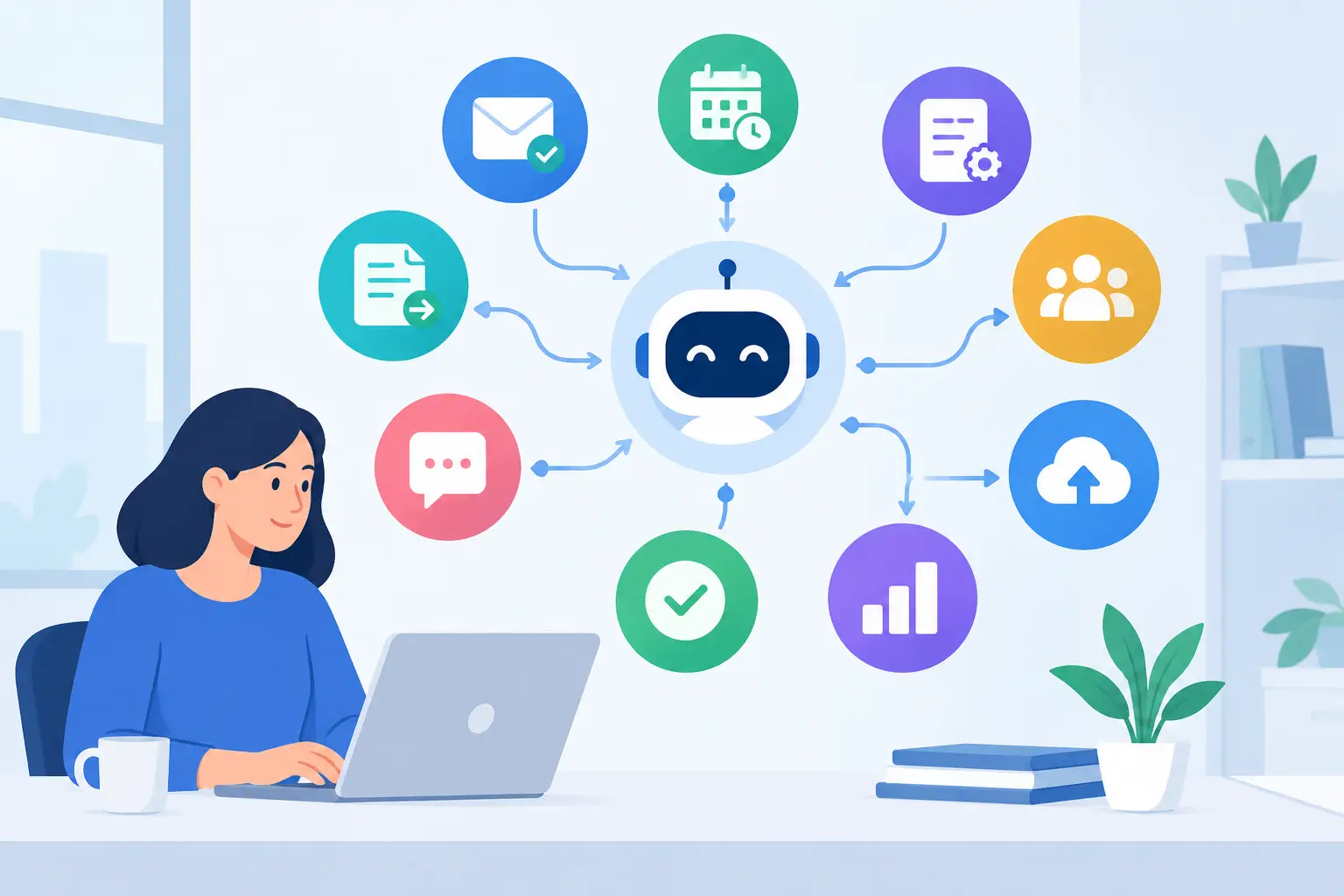
Hyper-automation refers to the integration of AI, machine learning, and advanced automation tools to streamline IT operations. By 2026, MSPs are leveraging these technologies to automate routine tasks such as patch management, monitoring, and ticket triage. AI-powered systems can analyze network traffic, detect anomalies, and initiate remediation before issues escalate. This reduces the workload on human technicians and allows MSPs to deliver faster, more reliable service to clients.
Cybersecurity as a Core Service
With cyber threats growing in frequency and sophistication, cybersecurity is no longer an add-on but a central pillar of managed IT services. MSPs are investing in managed detection and response (MDR), security information and event management (SIEM), and endpoint detection and response (EDR). These tools use AI to identify threats in real time and automate incident response. Additionally, MSPs are offering security awareness training and phishing simulations to help clients build a culture of cyber resilience.
Compliance and Regulatory Support
Regulatory compliance has become increasingly complex, especially for organizations in healthcare, finance, and legal sectors. MSPs now provide Compliance as a Service (CaaS), offering continuous monitoring, policy management, and audit support. They help businesses navigate frameworks such as SOC 2, HIPAA, GDPR, and PCI-DSS, reducing the risk of costly violations and reputational damage.
Multi-Cloud and Hybrid IT Management
As organizations adopt multi-cloud strategies, MSPs are tasked with managing resources across AWS, Azure, Google Cloud, and private data centers. This requires robust orchestration tools, cross-platform security policies, and seamless data migration capabilities. The best MSPs offer unified dashboards for visibility and control, ensuring that clients can optimize costs and performance while maintaining security and compliance.
Support for Remote and Hybrid Workforces
The shift to remote and hybrid work has introduced new challenges in endpoint management, secure access, and user support. MSPs are providing solutions such as zero-trust security, VPN alternatives, identity and access management (IAM), and device provisioning. AI-powered chatbots and self-service portals are enabling employees to resolve common issues quickly, reducing helpdesk burden and improving user satisfaction.
How We Evaluated the Top 10 MSPs in 2026
> Our evaluation of the top 10 managed IT service providers in 2026 is based on transparent criteria: AI-driven automation capabilities, cybersecurity expertise, compliance support, 24/7 response, cloud management, client reputation, and measurable business outcomes. We prioritize operational reliability and real-world results, drawing from both industry research and TechFusion’s client-first service experience.
When selecting the Top 10 Managed IT Service Providers in 2026: Trends and Reviews, we set clear criteria:
- AI-driven automation: Does the provider use AI to minimize downtime and automate routine fixes?
- Cybersecurity and compliance: How strong is their security stack, and do they address leading frameworks (SOC 2, HIPAA, ISO 27001)?
- Cloud management: Can they support multi-cloud and hybrid environments?
- 24/7 support: Are response times guaranteed and measurable?
- Client reputation: What do real business leaders say about service reliability and outcomes?
- Business impact: Do the provider’s solutions translate to tangible gains—downtime reduction, productivity, and peace of mind?
At TechFusion, we draw from both research and our operational experience. Our client-first approach means we value MSPs who aren’t just technology vendors, but true partners invested in your success.
Evaluation Methodology
To ensure a fair and comprehensive ranking, we combined quantitative data (such as service uptime, response times, and client retention rates) with qualitative feedback from verified client reviews and industry analysts. We also considered:
- Breadth of services offered
- Depth of expertise in regulated industries
- Innovation in AI and automation
- Flexibility and transparency in pricing and contracts
- Demonstrated ability to scale with client growth
By weighting these factors, we identified MSPs that consistently deliver value and reliability, regardless of client size or industry.
Top 10 Managed IT Service Providers in 2026 Trends and Reviews
> Below we present in-depth reviews of the top 10 managed IT service providers in 2026. Each provider is evaluated on AI-driven automation, cybersecurity, compliance, support quality, cloud management, and real-world business outcomes. Our focus is on helping businesses select an MSP that aligns with their operational needs and growth goals.
1. TechFusion, Inc.
As TechFusion, Inc., we lead the list for our relentless focus on client-first operational reliability and measurable business outcomes. We combine AI-driven automation, advanced cybersecurity, backup management, network optimization, and 24/7 support. Our real-world approach means every solution is tailored to fit the unique priorities of your business.
Key features:
- Hyper-automation of support and proactive monitoring
- Cloud management and seamless migration across AWS, Azure, and Google Cloud
- Compliance as a Service (CaaS) for SOC 2, HIPAA, ISO 27001
- 24/7 helpdesk with guaranteed response times
- Measurable improvement in uptime, security, and user satisfaction
Pros:
- Client-first methodology with proven outcomes
- Transparent, flexible pricing
- Adaptable to new regulations and business needs
Cons:
- Premium services may be overqualified for very small businesses with minimal IT needs
#### AI-Driven Service Excellence
TechFusion’s proprietary AI platform continuously monitors client environments, detecting anomalies and predicting potential failures before they occur. Automated scripts handle routine maintenance, patching, and updates, freeing up human experts for strategic projects. This approach has resulted in a documented 45% reduction in support tickets and a 30% improvement in resolution times across our client base.
#### Cybersecurity and Compliance Innovation
Our layered security stack includes managed SIEM, MDR, endpoint protection, and continuous vulnerability assessment. For regulated clients, our CaaS offering includes policy management, audit preparation, and real-time compliance dashboards. This ensures clients are always ready for regulatory changes and can demonstrate compliance to stakeholders and auditors.
2. Applied Tech
Applied Tech is recognized for its 20+ years supporting thousands of SMBs and SMEs. The company excels in managed IT services, cybersecurity, and co-managed IT, backed by partnerships with Cisco, CrowdStrike, and Datto (Cloudtango, 2026-01-01).
Key features:
- Managed and co-managed IT support
- Advanced security stack
- Strategic consulting
Pros:
- Deep experience in SMB/SME space
- Consistent customer satisfaction
Cons:
- May lack specialized compliance offerings for highly regulated sectors
#### Focus on SMBs and Co-Managed IT
Applied Tech’s co-managed IT model empowers internal IT teams by providing overflow support, advanced monitoring, and access to specialized expertise. This is particularly valuable for organizations with lean IT departments or those undergoing rapid growth. Their service desk operates on a 24/7 basis, with dedicated account managers ensuring personalized attention.
#### Security-First Approach
Applied Tech implements a multi-layered security framework, leveraging tools from leading vendors like Cisco and CrowdStrike. Their proactive threat hunting and incident response capabilities are supported by regular security awareness training for client staff, reducing human risk factors.
3. Corsica Technologies
Corsica Technologies stands out for innovation in cybersecurity, AI solutions, and digital transformation. They offer tailored data integration and compliance services, making them a strong fit for complex, regulated businesses.
Key features:
- Cybersecurity focus, including MDR and SIEM
- AI-powered support
- Digital transformation consulting
Pros:
- Strong track record in regulated industries
- Emphasis on AI-driven security
Cons:
- May be best suited for medium to large organizations
#### Digital Transformation Leadership
Corsica Technologies partners with clients to modernize legacy systems, implement cloud-first strategies, and optimize business processes. Their AI-powered support platform accelerates onboarding and reduces time-to-resolution for end users, while their compliance team ensures alignment with industry standards.
#### Industry-Specific Solutions
Corsica has developed specialized offerings for healthcare, finance, and manufacturing, addressing sector-specific regulations and operational challenges. Their managed detection and response services are tailored to the unique risk profiles of each industry.
4. NetGain Technologies
NetGain Technologies partners with Cisco, Microsoft, HP, and VMware, delivering customized IT support and network optimization. Their focus is on providing scalable managed services with a strong operational backbone.
Key features:
- Customized IT support and network management
- Cloud migration and optimization
- Vendor-agnostic technology stack
Pros:
- Flexible solutions for rapid business growth
- Broad technology partnerships
Cons:
- Some services may be less tailored for micro-businesses
#### Network Optimization and Cloud Migration
NetGain’s engineers design and implement robust network architectures that support high availability, low latency, and secure connectivity. Their cloud migration services include detailed planning, risk assessment, and post-migration optimization, ensuring minimal disruption and maximum ROI for clients.
#### Client-Centric Service Model
NetGain assigns dedicated account managers and technical leads to each client, enabling personalized service and quick issue resolution. Their client portal provides real-time visibility into service tickets, network health, and compliance status.
5. Digacore
Digacore delivers integrated managed IT support, cybersecurity, cloud management, and compliance. Their strength is a comprehensive service model, especially for healthcare and finance organizations needing tight compliance.
Key features:
- 24/7 support and helpdesk
- Security and compliance expertise
- Transparent pricing
Pros:
- Strong fit for regulated industries
- Operational stability and measurable outcomes
Cons:
- May not offer the deepest strategic consulting for digital transformation
#### Compliance-Focused Service Delivery
Digacore’s approach is rooted in operational stability and risk mitigation. They offer automated compliance monitoring, policy enforcement, and audit support for frameworks such as HIPAA and PCI-DSS. Their incident response team is available around the clock, ensuring rapid containment and recovery from security incidents.
#### Integrated IT and Cloud Management
Clients benefit from a unified platform that integrates IT support, cloud management, and backup services. Digacore’s transparent pricing and flexible contracts make them a reliable choice for organizations with evolving needs.
6. Integrated Computer Services (ICS)
ICS is known for a guaranteed 30-minute emergency response, AI-enhanced monitoring, and real-time threat hunting (ICS, 2026-01-01). They focus on proactive risk management and compliance-driven defense.
Key features:
- AI-driven monitoring and automation
- 30-minute guaranteed emergency response
- Compliance support
Pros:
- Rapid response for urgent needs
- Emphasis on proactive, not reactive, support
Cons:
- Localized focus may not suit national/international organizations
#### Real-Time Threat Hunting and AI Monitoring
ICS’s AI-driven platform continuously scans for anomalies, suspicious activity, and potential vulnerabilities. Their real-time threat hunting team investigates alerts and initiates containment procedures within minutes, minimizing the impact of cyber incidents.
#### Compliance-Driven Defense
ICS specializes in serving New Jersey businesses subject to state and federal regulations. Their compliance experts work closely with clients to develop policies, implement controls, and prepare for audits, ensuring ongoing regulatory alignment.
7. Scalo
Scalo’s dependable delivery and rapid IT team scaling are highlights. With nearly 20 years of experience and 750+ completed projects, clients praise their network monitoring and data protection (DesignRush, 2026-01-01).
Key features:
- Network monitoring and system maintenance
- Software development and AI consulting
- Managed security services
Pros:
- Proven delivery and reliability
- Strong client testimonials
Cons:
- Based in Poland, may require timezone adjustments for US clients
#### Software Development and AI Consulting
In addition to core managed IT services, Scalo offers custom software development and AI consulting, enabling clients to automate business processes and drive innovation. Their agile development teams can scale rapidly to meet project demands, making them a valuable partner for digital transformation initiatives.
#### Data Protection and System Maintenance
Scalo’s managed services include continuous system monitoring, patch management, and data backup. Their proactive approach minimizes downtime and ensures data integrity, even in complex, distributed environments.
8. PrimeSecured
PrimeSecured leads in AI-driven hyper-automation, offering autonomous IT services that predict and prevent incidents. Their layered AI stack accelerates support and strengthens compliance governance.
Key features:
- AI-powered hyper-automation and anomaly detection
- Real-time monitoring
- Multi-cloud orchestration
Pros:
- Advanced AI capabilities
- Proactive compliance and security
Cons:
- May be over-engineered for basic IT needs
#### Autonomous IT Services
PrimeSecured’s autonomous IT platform leverages machine learning to detect patterns, predict failures, and initiate self-healing actions. This reduces manual intervention and allows clients to maintain high service levels with minimal disruption.
#### Compliance Governance and Multi-Cloud Support
Their compliance governance tools provide automated policy enforcement, documentation, and audit trails. PrimeSecured’s multi-cloud orchestration ensures seamless management of workloads across different cloud providers, optimizing cost and performance.
9. Zazz MSP
Zazz specializes in serving mid-market tech companies, offering 24/7 monitoring, compliance support, and strategic planning. Their services bridge the gap between break-fix IT and enterprise support.
Key features:
- 24/7 monitoring and support
- Virtual CIO and strategic IT planning
- Cloud and hybrid management
Pros:
- Scalable solutions for fast-growing firms
- Support for SOC 2, HIPAA, ISO 27001
Cons:
- Focused on tech sector, may not fit traditional industries
#### Strategic IT Planning for Growth
Zazz’s virtual CIO services help clients align technology investments with business objectives, manage risk, and plan for future growth. Their 24/7 monitoring and support ensure high availability and rapid response to incidents.
#### Compliance and Hybrid Infrastructure Management
Zazz supports a range of compliance frameworks and specializes in managing hybrid environments, enabling clients to leverage both on-premises and cloud resources effectively.
10. Cortavo
Cortavo turns IT from a cost center into a growth driver, offering predictable monthly fees and freeing internal teams to focus on business priorities. Their selection is based on service quality and client focus.
Key features:
- Proactive security monitoring
- Cloud and network management
- Scalable, fixed-price services
Pros:
- Cost control and business focus
- Specialized expertise in security and cloud
Cons:
- Breadth of services may be less for highly specialized needs
#### Predictable Pricing and Business Alignment
Cortavo’s all-inclusive pricing model eliminates budget surprises and enables clients to scale services as needed. Their proactive security monitoring and cloud management services are designed to support business growth and operational resilience.
#### Specialized Security and Cloud Expertise
With a focus on cybersecurity and cloud solutions, Cortavo helps clients secure their infrastructure, manage risk, and achieve regulatory compliance. Their consultative approach ensures that technology investments align with business objectives.
Cloud Management and Migration Capabilities
> Leading MSPs in 2026 provide comprehensive cloud management and migration services, supporting multi-cloud and hybrid environments. Providers partner with major platforms like AWS, Microsoft Azure, and Google Cloud to deliver scalable, secure, and efficient cloud solutions tailored to business needs. Effective MSPs ensure seamless migration, ongoing optimization, and robust security for cloud operations.
Cloud management is a must-have in 2026. MSPs now offer:
- Multi-cloud and hybrid environment support
- Partnerships with AWS, Azure, Google Cloud
- Seamless migration and onboarding
- Cloud security and optimization
The best providers, like TechFusion, design cloud solutions that scale as your business grows. They handle everything—from strategy and migration to daily management—so you can innovate without worrying about downtime or data loss. Ongoing optimization ensures you only pay for what you need, and robust security protects every asset.
Multi-Cloud Strategies
Organizations increasingly adopt multi-cloud strategies to avoid vendor lock-in, optimize costs, and improve resilience. MSPs offer orchestration tools that provide visibility and control across different cloud platforms, enabling clients to move workloads as needed and maintain consistent security policies. Automated scaling and resource allocation ensure that cloud environments remain efficient and cost-effective.
Cloud Security and Compliance
MSPs implement layered security controls for cloud environments, including identity and access management, encryption, and continuous monitoring. Compliance tools are integrated into cloud management platforms, enabling real-time policy enforcement and automated audit reporting. These capabilities are essential for clients in regulated industries who must demonstrate ongoing compliance with industry standards.
Seamless Migration and Onboarding
Migration to the cloud can be complex and risky without proper planning and execution. Top MSPs use proven methodologies and automated tools to assess workloads, plan migrations, and execute cutovers with minimal disruption. Post-migration support includes performance tuning, cost optimization, and user training, ensuring a smooth transition and rapid realization of benefits.
IT Support and Helpdesk Excellence
> Top MSPs distinguish themselves by offering 24/7 IT support and responsive helpdesk services. In 2026, this includes AI-enhanced ticketing, proactive monitoring, and rapid incident resolution. Providers are expected to guarantee response times and deliver measurable improvements in user experience, minimizing downtime and supporting hybrid workforces effectively.
Responsive support is the difference between a minor hiccup and a costly outage. Top MSPs now promise:
- 24/7 availability, with guaranteed response times (ICS guarantees 30 minutes)
- AI-driven ticketing systems that predict and resolve issues faster
- Proactive monitoring to catch problems before users notice
With remote and hybrid work the norm, helpdesks must deliver consistent, high-quality support across multiple locations and devices. AI-enhanced systems reduce wait times and improve satisfaction.
AI-Enhanced Helpdesk Operations
AI-powered ticketing systems automatically categorize, prioritize, and route support requests, reducing manual triage and accelerating resolution. Chatbots handle common queries and provide self-service options, freeing up human agents for complex issues. Predictive analytics identify patterns and recommend preventative actions, reducing the frequency of recurring problems.
Proactive Monitoring and Incident Response
Continuous monitoring tools alert MSPs to potential issues before they impact users. Automated remediation scripts can resolve common problems instantly, while escalation protocols ensure that critical incidents receive immediate attention. Regular reporting provides clients with insights into ticket volume, resolution times, and user satisfaction, supporting continuous improvement.
Supporting Distributed Workforces
MSPs have adapted their support models to accommodate remote and hybrid workforces. Secure remote access tools, device management platforms, and cloud-based collaboration suites are standard offerings. Helpdesk teams are trained to support a wide range of devices and operating systems, ensuring that employees remain productive regardless of location.
Cybersecurity and Compliance Leadership
> In 2026, cybersecurity and compliance are at the core of every leading MSP’s offering. Providers deliver advanced threat detection, managed SIEM, MDR, and compliance as a service (CaaS) to address evolving regulatory demands. MSPs must proactively monitor, prevent, and respond to threats while supporting frameworks like SOC 2, HIPAA, and ISO 27001 for clients in regulated industries.
Cybersecurity is the fastest-growing part of managed IT, with services expanding by 18% a year. Top MSPs offer:
- Advanced threat detection using AI
- Managed SIEM and MDR for real-time security
- Compliance support for SOC 2, HIPAA, ISO 27001
- Compliance as a Service for ongoing regulatory needs
A great MSP will not just defend against threats but also prepare you for audits and evolving rules. This is critical for industries like healthcare, finance, and legal.
Advanced Threat Detection and Response
MSPs deploy AI-powered tools to monitor network traffic, detect anomalies, and block malicious activity in real time. Managed detection and response (MDR) services combine automated threat analysis with human expertise, ensuring rapid identification and containment of attacks. Regular penetration testing and vulnerability assessments help clients stay ahead of emerging threats.
Compliance as a Service (CaaS)
CaaS offerings include continuous monitoring of compliance status, automated policy enforcement, and preparation for audits. MSPs maintain up-to-date knowledge of regulatory changes and provide clients with actionable guidance to maintain compliance. This reduces the administrative burden on internal teams and minimizes the risk of non-compliance penalties.
Security Awareness and Training
Recognizing that human error is a leading cause of security incidents, MSPs deliver ongoing security awareness training, phishing simulations, and policy education. This helps clients build a culture of security and reduces the likelihood of successful attacks.
Backup and Disaster Recovery Solutions
> Reliable backup and disaster recovery are essential MSP services in 2026. Leading providers offer managed backup, rapid restore, and business continuity solutions to minimize downtime and protect against data loss. These solutions are increasingly automated and integrated with cloud platforms, ensuring resilience for businesses of all sizes.
Managed backup and disaster recovery now feature:
- Automated, cloud-integrated backups
- Rapid restore of critical data and systems
- Business continuity planning
With ransomware and outages on the rise, these services ensure your business stays up and running, even after a major incident. Modern MSPs automate backup processes and test restores regularly for full confidence.
Automated Backup and Recovery
MSPs implement automated backup schedules, ensuring that data is copied to secure, geographically diverse locations. Incremental and differential backups minimize storage costs and reduce recovery times. Regular testing of restore processes gives clients confidence that data can be recovered quickly in the event of a disaster.
Business Continuity Planning
Beyond simple data backup, MSPs work with clients to develop comprehensive business continuity plans. These plans outline roles, responsibilities, and procedures for responding to various scenarios, from cyberattacks to natural disasters. Tabletop exercises and simulations help organizations validate their readiness and identify areas for improvement.
Cloud-Based Disaster Recovery
Cloud-based disaster recovery solutions enable rapid failover to secondary environments, minimizing downtime and data loss. MSPs manage the replication of critical systems and data to the cloud, allowing clients to resume operations quickly after an incident.
MSPs for SMBs and SMEs
> Small and mid-sized businesses benefit most from MSPs that deliver scalable, flexible, and affordable solutions. Top providers in 2026 specialize in tailored support, simplified onboarding, and clear pricing. Their services enable SMBs and SMEs to access enterprise-grade security, cloud, and compliance without the complexity of managing IT in-house.
For SMBs and SMEs, MSPs make enterprise-grade IT accessible and affordable. According to Cloudtango, annual rankings focus on these business sizes. The best MSPs offer:
- Scalable, right-sized solutions
- Simple onboarding and migration
- Transparent, predictable pricing
This allows growing companies to compete on a level playing field, without the overhead of a large IT department.
Tailored Support for Growing Businesses
MSPs understand the unique challenges faced by SMBs and SMEs, such as limited budgets, resource constraints, and the need for rapid scalability. Providers offer modular service packages that can be adjusted as the business grows, ensuring that clients only pay for what they need.
Simplified Onboarding and Migration
To reduce disruption, MSPs streamline the onboarding process with automated discovery tools, standardized procedures, and dedicated project managers. Migration services include data transfer, application integration, and user training, enabling clients to realize value quickly.
Access to Enterprise-Grade Tools
By partnering with leading technology vendors, MSPs provide SMBs and SMEs with access to advanced tools and platforms that would otherwise be cost-prohibitive. This includes security solutions, cloud services, and compliance frameworks, leveling the playing field with larger competitors.
Understanding MSP Pricing Models in 2026
> MSP pricing models in 2026 range from per-user and per-device fees to all-inclusive monthly plans. The shift to predictable OpEx spending enables businesses to control costs and access comprehensive services. Transparent pricing and contract flexibility are key differentiators, especially for SMBs and mid-market firms seeking scalable IT support.
In 2026, MSP pricing is more transparent than ever. Typical models include:
- Per-user or per-device fees: Pay for exactly what you need
- All-inclusive monthly plans: One flat rate for unlimited support
- Contract flexibility: Month-to-month or annual agreements
These models help businesses manage IT costs as a predictable operating expense, rather than a surprise capital outlay.
Pricing Transparency and Flexibility
MSPs provide detailed service catalogs and clear pricing structures, allowing clients to understand exactly what is included in each package. Flexible contracts accommodate changes in business size, technology needs, and regulatory requirements, reducing the risk of vendor lock-in.
Value-Added Services
Many MSPs bundle value-added services such as quarterly business reviews, technology roadmaps, and strategic consulting into their packages. This ensures that clients receive ongoing guidance and support, maximizing the return on their IT investment.
Cost Control and Predictability
By converting IT spending from unpredictable capital expenses to fixed operational expenses, MSPs enable clients to budget more effectively. This is especially important for SMBs and mid-market firms that need to manage cash flow and justify technology investments to stakeholders.
How to Choose the Right MSP for Your Business in 2026
> Choosing the right MSP in 2026 requires evaluating service breadth, AI and automation capabilities, security expertise, compliance support, and client reputation. Businesses should seek providers with proven operational reliability, scalable solutions, and a focus on measurable business outcomes. Transparent evaluation criteria and real-world reviews are essential for informed decision-making.
When selecting your MSP, consider:
- Breadth of services: Does the MSP cover your entire IT stack?
- AI and automation: Are their systems smart enough to prevent problems, not just fix them?
- Security and compliance: Do they meet your industry’s regulatory needs?
- Client reputation: What do other businesses say about their experience?
- Measurable outcomes: Can the MSP prove their value with real data?
A true partner will work with you, not just for you, aligning IT solutions with your business goals.
Steps to Evaluate MSPs
1. Assess Your Business Needs: Identify your current pain points, growth plans, and regulatory requirements.
2. Request Detailed Proposals: Ask potential MSPs to provide service descriptions, SLAs, and pricing models.
3. Check References and Reviews: Speak with current clients and review third-party ratings to gauge service quality.
4. Evaluate Technical Capabilities: Ensure the MSP has expertise in your technology stack, industry, and compliance frameworks.
5. Review Contract Terms: Look for flexibility, transparency, and clear exit clauses.
Red Flags to Watch For
- Lack of documented processes or SLAs
- Poor communication or slow response times
- Limited experience in your industry
- Inflexible contracts or hidden fees
- Inadequate security or compliance controls
FAQ
Q&A 1
Question: Who are the top managed IT service providers in 2026?
Answer: The top managed IT service providers in 2026 include industry leaders recognized for AI-driven automation, cybersecurity, compliance, and 24/7 support. Rankings from Cloudtango, Digacore, and DesignRush highlight providers such as Applied Tech, Corsica Technologies, NetGain Technologies, and Digacore, each excelling in innovation and client satisfaction.
Q&A 2
Question: What are the latest trends in managed IT services for 2026?
Answer: Key trends in 2026 include AI-driven hyper-automation, advanced cybersecurity services, multi-cloud management, and compliance as a service. MSPs are investing heavily in AI to reduce ticket volume, accelerate response times, and deliver proactive threat detection for businesses of all sizes.
Q&A 3
Question: How do I choose the best managed IT service provider for my business?
Answer: To choose the best managed IT service provider, evaluate their expertise in AI automation, cybersecurity, compliance, 24/7 support, and cloud management. Consider client reviews, measurable business outcomes, transparent pricing, and how well their services align with your company’s specific needs and growth goals.
Q&A 4
Question: What should I expect from a top MSP in terms of cybersecurity?
Answer: A top MSP in 2026 should offer advanced threat detection, managed SIEM, MDR, and compliance support for frameworks like SOC 2, HIPAA, and ISO 27001. Proactive monitoring, regular security assessments, and rapid incident response are essential to protect your business from evolving cyber threats.
Q&A 5
Question: How are MSP pricing models structured in 2026?
Answer: MSP pricing models in 2026 typically include per-user or per-device fees, as well as all-inclusive monthly plans. The trend is toward predictable OpEx spending, contract flexibility, and transparent pricing, allowing businesses to manage costs while accessing comprehensive IT support.
Q&A 6
Question: What makes an MSP a true partner versus a basic vendor?
Answer: A true MSP partner goes beyond basic IT support by providing strategic guidance, proactive security, and measurable business outcomes. In 2026, partnership qualities include operational reliability, responsiveness, and a client-first approach that aligns IT solutions with your business objectives.
Conclusion
The Top 10 Managed IT Service Providers in 2026: Trends and Reviews demonstrates that the best MSPs don’t just manage your technology—they help grow your business. Look for a partner with the right mix of AI-driven automation, cybersecurity leadership, cloud expertise, and proven business outcomes. As the MSP industry evolves, choosing an adaptable, experienced, and client-focused provider gives your business the confidence to innovate and succeed. If you’re ready to take your IT strategy to the next level, start with this list and evaluate your options with practical, business-focused criteria.
For businesses interested in exploring tailored IT support solutions, our detailed insights on IT Support Services for Small Business provide valuable guidance on scalable and effective helpdesk offerings.
To understand how to maximize your network’s performance, consider our expert advice in How to Optimize Your Business Network for Maximum Efficiency, which complements the network optimization services discussed here.
For a deeper dive into cloud strategies, our post on How to Leverage Cloud Services to Drive Business Growth in 2026 offers practical tips that align with the cloud management trends highlighted in this article.
Additionally, for a comprehensive view of the managed IT services landscape in the US, see our analysis in Managed IT Services in the US: Best Providers and Trends in 2026, which complements the provider reviews presented here.
For businesses located in Florida, especially Tampa Bay, our focused guide on Managed IT Services Tampa Bay offers localized insights relevant to the broader trends discussed.
Finally, for alternative approaches to data protection, our article on Alternatives to Traditional Backup Management: Cloud vs On-Premises Solutions provides a nuanced perspective that supports the backup and disaster recovery solutions outlined above.
Written by Bryce Ayers, Support Engineer